Ingredients
Method
Step 1: Prepare Your Dough
- Start by mixing the flour and salt together in a large mixing bowl. This helps distribute the salt evenly. Create a well in the center and gradually add the water and olive oil. Mix everything together with your hands, scraping the flour from the sides of the bowl until a dough starts to form.
Step 2: Knead It Well
- Transfer the dough onto a lightly floured surface. Knead it for about 10 minutes, until it becomes smooth and elastic. You want it to feel somewhat firm but still stretchy. If the dough is too sticky, sprinkle a bit of flour, but be cautious not to overdo it.
Step 3: Rest Your Dough
- Wrap the kneaded dough in plastic wrap or a damp kitchen towel. Let it rest for at least 30 minutes. This allows the gluten to relax, making it easier to roll out later.
Step 4: Roll into Strands
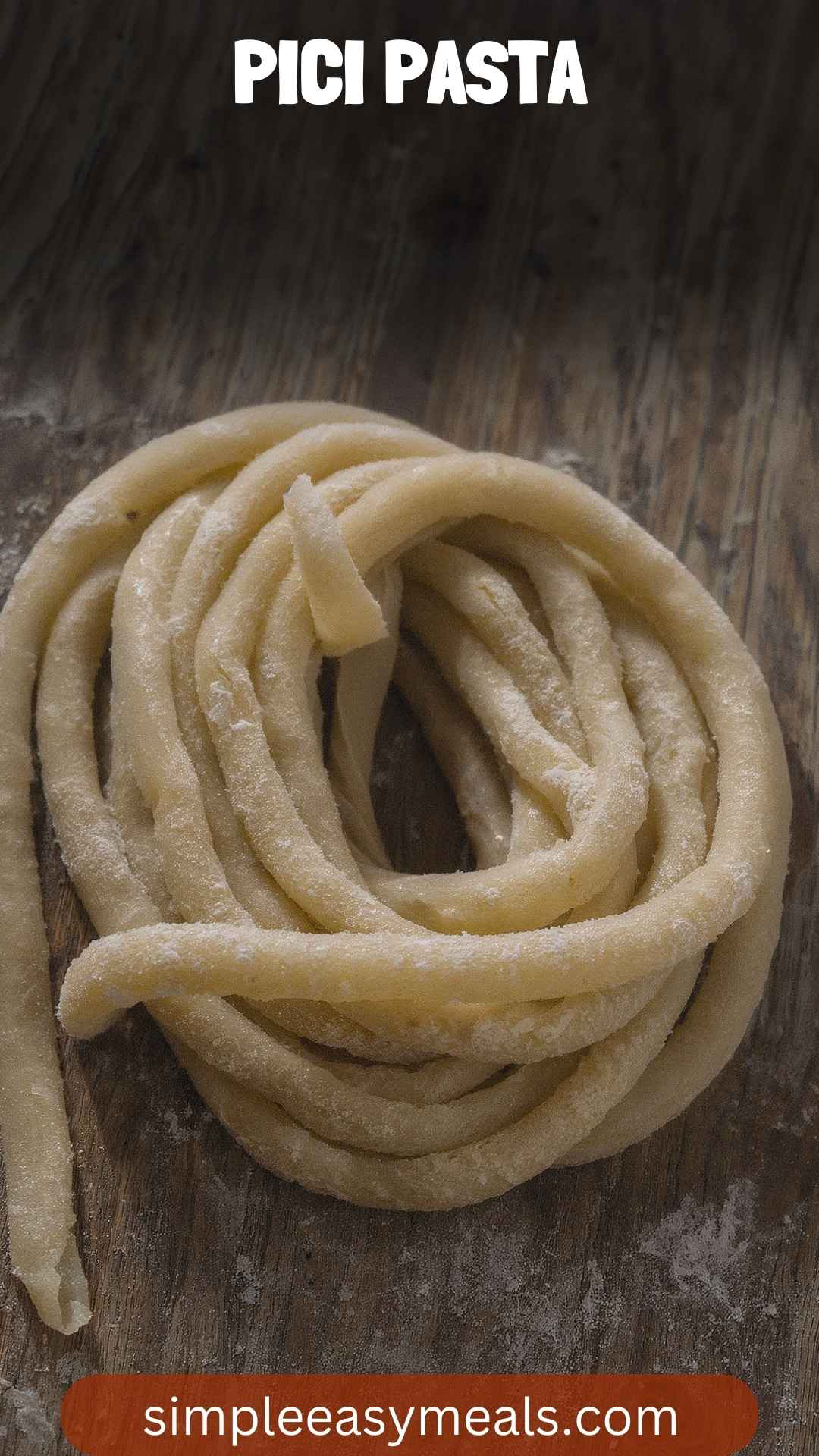
- Once rested, cut the dough into four equal portions. Take one piece and roll it into a rope shape about the thickness of your little finger. Aim for a length of around 30-40 centimeters. Repeat this process with the other dough portions.
Step 5: Dust with Semolina
- Dust each strand lightly with semolina flour; this prevents them from sticking together.
Step 6: Cook Your Pici
- Bring a large pot of salted water to a boil. Cook the pici for about 3-4 minutes, or until they float to the surface. Fresh pasta cooks quickly! Use a slotted spoon to transfer them to a pan with your preferred sauce.
Step 7: Serve with Flair
- Toss the pasta with your sauce of choice. If using a simple garlic and oil sauce, add a drizzle of high-quality olive oil and a sprinkle of fresh herbs. Don’t forget the cheese on top!
Notes
- Adjust Consistency: Different flours absorb water differently. Start with a lesser amount of water and increase as necessary to achieve a pliable but firm dough.
- Experiment with Flavors: Try adding herbs or spices to the dough for a twist. Fresh basil or oregano can enhance the flavor profile wonderfully.
- Make Ahead: Pici can be made in advance and stored in the fridge for a day or two, or frozen for up to a month. Just ensure they’re well-dusted with semolina to prevent sticking.
- Sauce Pairings: Don’t hesitate to mix and match sauces. Pici holds up to rich sauces beautifully, so don’t shy away from robust flavors.
- Make It a Family Activity: Encapsulate the Italian spirit by making this a family affair. Getting everyone involved in the rolling can transform dinner into a fun experience.