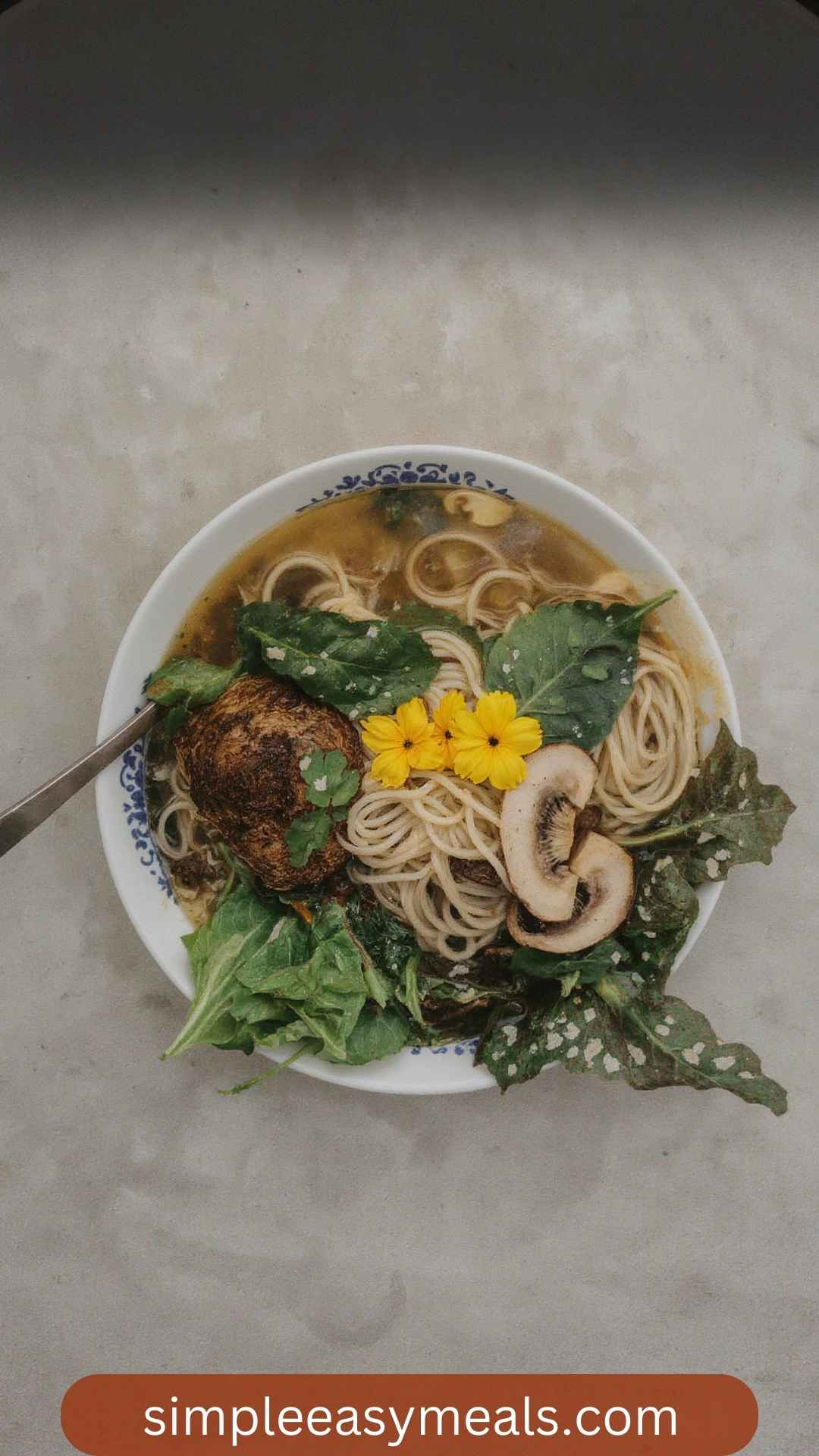
Ingredients
Method
Step 1: Sauté the Aromatics
- tart by heating your olive oil in a large pot over medium heat. Once it’s shimmering, toss in the chopped onion. Sauté until it's translucent, about 5 minutes. The scent? Heavenly. Next, add your sliced garlic and ginger. Cook for an additional minute, stirring frequently. Trust me, your kitchen will smell like a restaurant.
Step 2: Cook the Mushrooms
- Add the thinly sliced mushrooms to the pot. Sauté until they soften, about 5 minutes. The mushrooms will soak up those fragrant juices. You can almost see the flavor unfolding right before your eyes.
Step 3: Spice it Up
- Sprinkle in the crushed red pepper flakes, stirring them into the mixture. If you like heat, feel free to add more! Then, add the kimchi along with its reserved juice. This will introduce a tangy, spicy bite you’ll love. Cook for another 2-3 minutes.
Step 4: Add the Stock
- Pour in the vegetable stock. The mixture should come to a gentle simmer. This is where all those flavors meld together as the broth takes on the essence of the ingredients.
Step 5: Sweeten the Pot
- Stir in the honey or brown sugar, ensuring it dissolves nicely. This sweetness balances the heat from the kimchi and red pepper flakes, creating a harmony in the soup that is just delightful.
Step 6: Broccoli, Miso, and Tofu
- Add your broccoli florets and stir. Cook for about 3-4 minutes until they are vibrant in color but still crisp. Now, whisk together the miso paste with a little hot broth from the pot to help dissolve it before adding it back in. This prevents clumps. If you're using tofu, toss it in after the miso. Simmer for an additional 5 minutes, allowing everything to blend perfectly.
Step 7: Final Touches
- Just before serving, drizzle the toasted sesame oil over the top for that nutty aroma. Taste the soup; adjust seasonings if necessary with soy sauce.
Notes
- Use Fresh Kimchi: Freshly made kimchi yields the best flavor. If it’s too old, it might be overly tangy.
- Adjust Spice Levels: If you’re unsure about the heat, start with less red pepper. You can always add more later.
- Miso Paste Substitutes: If you don’t have miso, you could use soy sauce. It’s not the same, but it’s close!
- Customize Your Veggies: Feel free to add any other vegetables like carrots or spinach.
- If You Love Broth: Add more stock to make it soupier.